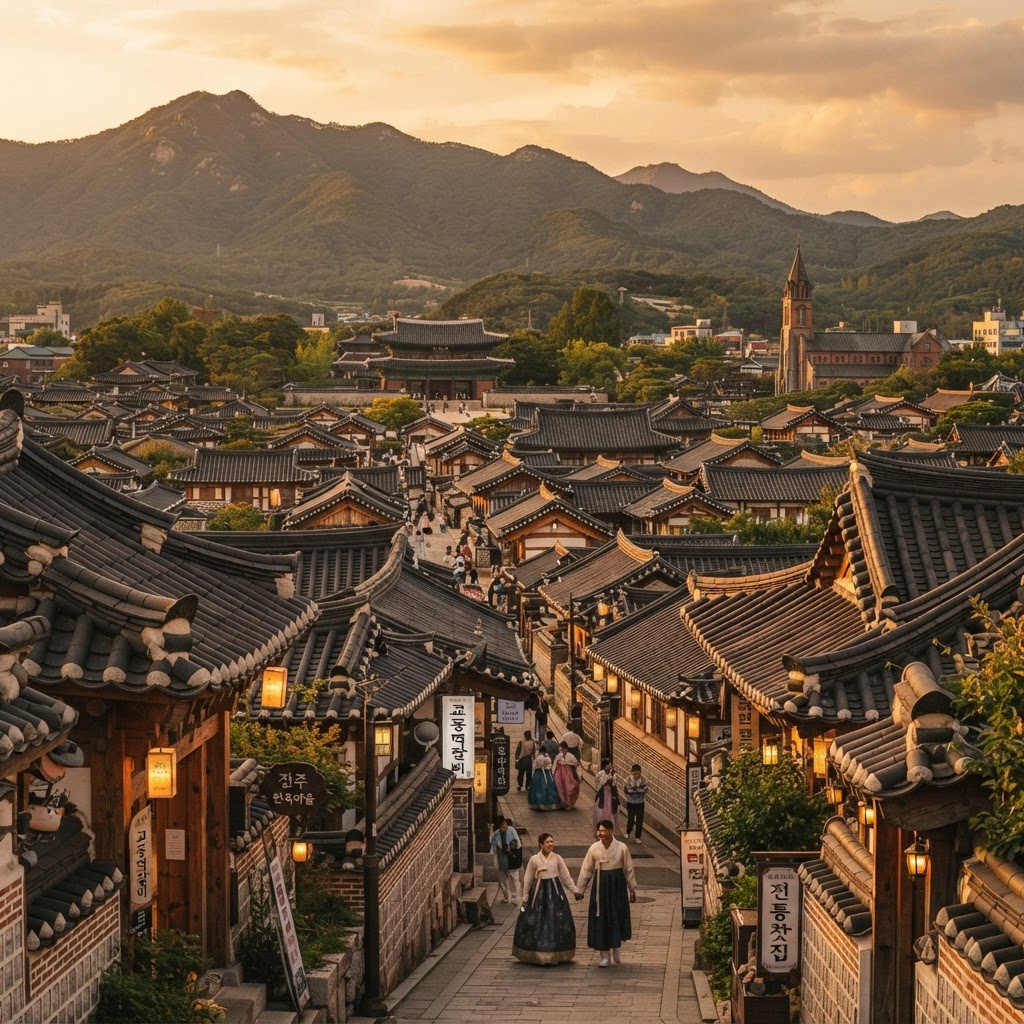
Traditional hanok village & Korea’s food capital
Jeonju
전주 · Hanok village & the home of bibimbap
Korea's culinary heart and keeper of tradition, Jeonju is home to the country's largest cluster of preserved hanok houses and the birthplace of bibimbap. Wander tiled-roof lanes, sip local makgeolli and eat exceptionally well.
Top sightsSights
Jeonju Hanok Village
Over 700 traditional tiled-roof houses filled with tea rooms, craft shops and guesthouses.
Gyeonggijeon Shrine
A serene shrine housing the portrait of the founder of the Joseon dynasty.
Jeondong Catholic Church
An elegant early-20th-century Romanesque-Byzantine church beside the hanok village.
Omokdae
A pavilion on a rise with lovely views over the sea of hanok rooftops.
Jaman Mural Village
A steep hillside hamlet decorated with playful murals and tiny cafes.
What to eatFood
Jeonju bibimbap
The definitive version of Korea’s mixed-rice bowl, lavish with local vegetables and beef.
Kongnamul gukbap
A comforting bean-sprout-and-rice soup, a Jeonju hangover cure.
Makgeolli
Milky rice wine served with a spread of free side dishes at old makgeolli houses.
Good to know
- The KTX reaches Jeonju from Seoul in about 1h45m.
- Rent a hanbok to stroll the hanok village and slip into the atmosphere.
- Come hungry — Jeonju is widely considered Korea’s best city for eating.
Getting there
Jeonju is served by the KTX from Seoul (about 1h45m); the nearest airport is Gunsan (KUV), with Gimpo and Incheon reachable by rail.
Next city
Seoul